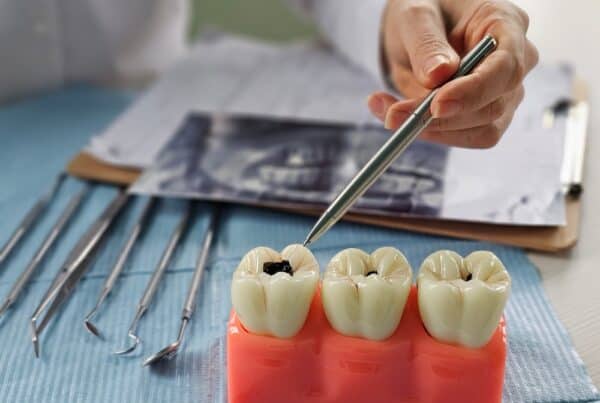
Tooth decay develops gradually, often starting with subtle changes that are easy to miss. Dental Fillings play an important role in treating decay once it progresses beyond the earliest stage, helping restore the tooth and protect it from further damage. At City Smile Dental Center, we focus on early detection and gentle care, guiding patients through each stage so treatment remains simple, comfortable, and effective.
How Tooth Decay Begins
Tooth decay starts when plaque builds up on the surface of the teeth. Bacteria in plaque feed on sugars from food and drinks, producing acids that weaken the enamel over time.
If this process continues, the enamel begins to break down, leading to the formation of a cavity. Understanding these stages helps you recognise when treatment may be needed.
Stage 1: Early Enamel Changes
What Happens at This Stage
In the earliest stage, the enamel begins to lose minerals, which may appear as faint white spots on the tooth. At this point, the surface of the tooth is still intact.
This stage is often painless and may go unnoticed without a dental check-up.
Treatment Approach
Early enamel changes can often be managed with preventive care. Fluoride treatments and improved oral hygiene help strengthen the enamel and may stop the decay from progressing.
At this stage, a filling is usually not required.
Stage 2: Enamel Decay
What Happens at This Stage
As decay progresses, the enamel begins to break down, forming a small cavity. You may start to notice sensitivity or visible dark spots on the tooth.
This is the stage where intervention becomes more important to prevent further damage.
Treatment Approach
A filling is typically recommended at this stage. The decayed area is removed, and the tooth is restored to protect it and stop the decay from spreading.
Early treatment keeps the process simple and comfortable.
Stage 3: Dentin Decay
What Happens at This Stage
If decay moves beyond the enamel, it reaches the dentin, which is softer and more sensitive. At this stage, the cavity can grow more quickly, and sensitivity to hot, cold, or sweet foods may become more noticeable.
The tooth may also feel weaker or uncomfortable when chewing.
Treatment Approach
Fillings are still commonly used at this stage, but they may need to be larger to restore the tooth effectively. The dentist carefully removes the decay and rebuilds the tooth to maintain its strength.
Prompt treatment helps prevent the need for more complex care.
Stage 4: Pulp Involvement
What Happens at This Stage
If decay continues to progress, it can reach the pulp, the inner part of the tooth that contains nerves and blood vessels. This can lead to significant discomfort or pain.
The tooth may become sensitive, and infection may develop if not treated.
Treatment Approach
At this stage, a filling alone is usually not enough. Root canal treatment may be required to remove the affected tissue and clean the inside of the tooth.
After treatment, the tooth is typically restored with a crown for added protection.
Stage 5: Advanced Damage
What Happens at This Stage
In advanced cases, the tooth structure may be severely weakened, and infection may spread beyond the tooth. This can cause significant discomfort and affect surrounding tissues.
Immediate care is important to manage the condition and prevent further complications.
Treatment Approach
Depending on the extent of the damage, treatment may involve a crown, root canal therapy, or, in some cases, extraction if the tooth cannot be saved.
The focus is always on preserving the natural tooth whenever possible.
Why Fillings Are Important in Early Stages
Stopping Decay Progression
Fillings play a key role in stopping decay once a cavity has formed. By removing the damaged area and sealing the tooth, they prevent bacteria from continuing to cause harm.
This helps maintain the health of the tooth and surrounding structures.
Restoring Tooth Function
A filling restores the shape and strength of the tooth, allowing you to bite and chew comfortably. It also helps maintain proper alignment with surrounding teeth.
This supports overall oral health and daily comfort.
How to Prevent Progression of Decay
Maintain Good Oral Hygiene
Brushing twice a day and flossing daily help remove plaque and reduce the risk of decay progressing through its stages.
Consistent habits protect your teeth over time.
Attend Regular Dental Visits
Routine check-ups allow for early detection of decay before it reaches more advanced stages. This helps keep treatment simple and effective.
Preventive care is key to long-term dental health.
Make Balanced Dietary Choices
Limiting sugary and acidic foods helps protect the enamel and reduces the risk of cavities forming or worsening.
Healthy choices support strong teeth and overall well-being.
Supporting Long-Term Dental Health
Understanding the stages of tooth decay helps you take a proactive approach to your dental care. Early attention to changes in your teeth allows for simpler treatments and better outcomes.
At City Smile Dental Center, we provide clear guidance and gentle care to support you and your family at every stage of dental health.
Conclusion
Tooth decay develops in stages, from early enamel changes to more advanced damage, and each stage requires a different approach to care. Fillings play an essential role in treating decay once a cavity forms, helping to restore and protect the tooth. At City Smile Dental Center, we focus on early detection, clear communication, and practical solutions that support long-term oral health. With the right care and regular check-ups, you can maintain a healthy, confident smile at every stage of life.